Selling a House With Cast Iron Sewer Pipes in Virginia
By Virginia Cash Real Estate ·
Cast iron sewer pipe is one of those problems most homeowners never think about until a buyer's inspector runs a camera down the drain. Then a report comes back with words like "scaling," "channeling," "offset joint," or "root intrusion," and suddenly a sale you thought was on track is in trouble.
This guide covers what's going on with older cast iron drains, how it affects a Virginia home sale, what the repair options are, and when it makes more sense to sell the house as-is. It's part of our guide to selling a house with major defects in Virginia.
Why Cast Iron Sewer Lines Fail
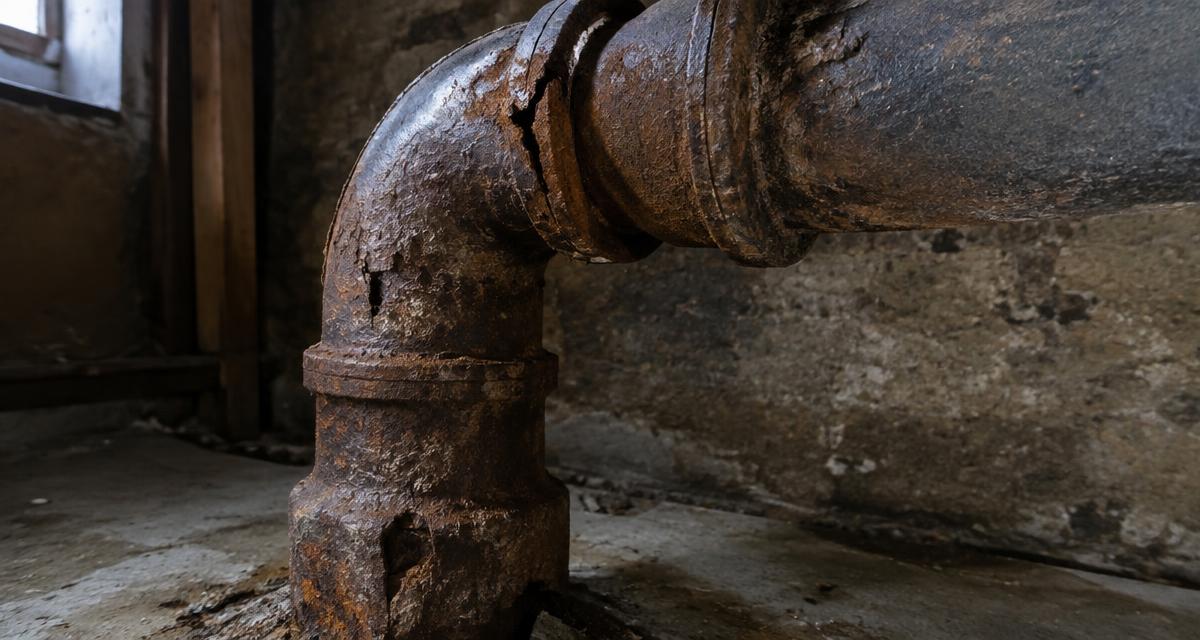
Cast iron was the standard material for drain, waste and vent piping in American homes for decades, and it's still found in many houses built before the 1970s and early 1980s. It's heavy, quiet, and strong, which is why it lasted so long. But it doesn't last forever. Over time:
- Internal corrosion and scaling build up on the inside of the pipe, narrowing it and catching debris.
- Channeling happens when the bottom of a horizontal pipe wears away, leaving a groove where waste flows and eventually a hole.
- Cracks and breaks form from age, ground movement, or heavy loads above the line.
- Joint separation and root intrusion occur where pipe sections meet, especially in the yard.
There's no single lifespan that applies to every home. Water chemistry, soil, how the house was used, and how well it was installed all matter.
Why This Comes Up So Often in Hampton Roads
Older neighborhoods in Norfolk, Portsmouth and Hampton, along with many 1950s–1970s homes in Newport News, Chesapeake and Virginia Beach, are likely to have cast iron drains somewhere in the system. Coastal Virginia's high water table and wet soils can also make it harder to dig and replace a sewer line, and older mature trees mean roots are a common culprit. In slab-on-grade homes, cast iron drains often run under the concrete, which makes replacement more involved.
Some older homes also have clay (terracotta) or Orangeburg pipe for the section running from the house to the street. Clay holds up well on its own, but its joints let roots in. Orangeburg is a fiber pipe that can deform and collapse. A sewer scope will usually show which material you have.
How a Failing Sewer Line Affects a Sale
Inspection
More Virginia buyers are adding a sewer scope to their inspection, especially on older homes. If the camera shows cracks, heavy scaling, roots, or a belly (a sag where water collects), the inspector will recommend evaluation by a plumber, and the buyer will usually ask for repairs or a credit.
Appraisal and Financing
Appraisers don't scope sewer lines, so a hidden problem may not come up on the appraisal. But an active backup, sewage odor, or visible damage can be noted as a condition affecting health and safety, and a lender may require repairs.
Insurance
Standard homeowners policies typically don't cover wear-and-tear failure of a sewer line, and many only cover sudden backups if you've added a specific endorsement. That doesn't usually block a buyer from getting a policy, but it does mean the buyer knows the repair will be on them.
Disclosure
If you know about a sewer problem, such as repeated backups or a previous scope report, don't hide it. Sellers who conceal known defects can face claims later. When in doubt, ask a real estate attorney what you need to share.
Ready to Sell Your Hampton Roads Home Fast?
Virginia Cash Real Estate buys houses across Hampton Roads for cash — no repairs, no fees, no commissions. Get a fair cash offer within 24 hours.
Repair Options and What They Involve
Spot repair. If the damage is limited to one section, a plumber may excavate and replace just that piece.
Trenchless lining (cured-in-place pipe, or CIPP). A resin-saturated liner is pulled into the existing pipe and cured to form a new pipe inside the old one. It avoids most digging, but it requires the old pipe to be in good enough shape to line.
Pipe bursting. A new pipe is pulled through the old one while breaking it apart, using small access pits instead of a full trench.
Full replacement by excavation. The old line is dug up and replaced. Under a slab, this can mean cutting through floors inside the house.
Costs vary widely with the length of the line, depth, whether it's under the slab or the yard, the method used, and permitting. We're not going to put a number on it. Get a camera inspection and at least two written estimates before deciding.
Should You Fix the Sewer Line or Sell As-Is?
Fixing it usually makes sense when:
- The problem is limited to one section or can be lined.
- The house is otherwise in solid shape and would sell well.
- You want to keep the buyer pool open to FHA, VA and conventional buyers without a big credit.
A clean follow-up scope and a transferable warranty from the plumber can be strong selling points.
Selling as-is makes more sense when:
- The line runs under the slab and replacement means tearing up floors.
- There's been sewage backup into the house, with water damage or mold on top of it.
- The house has other older-home issues, like galvanized or polybutylene supply lines, aluminum wiring, or foundation problems.
- You inherited the house, live out of the area, or can't manage excavation and permits.
Our major repairs page explains how we buy houses that need this kind of work. We price the sewer repair into our offer, so you don't need to coordinate plumbers, digging, or restoring the yard or floors.
Selling an Older Home With Sewer Problems in Hampton Roads
We buy houses with failing sewer lines as-is for cash across Hampton Roads, especially older cast iron, clay and Orangeburg lines in Norfolk, Portsmouth and Hampton. If a sewer scope just derailed your sale, we can look at the house as it is and give you a straight answer on whether to fix it and relist or sell it to us.