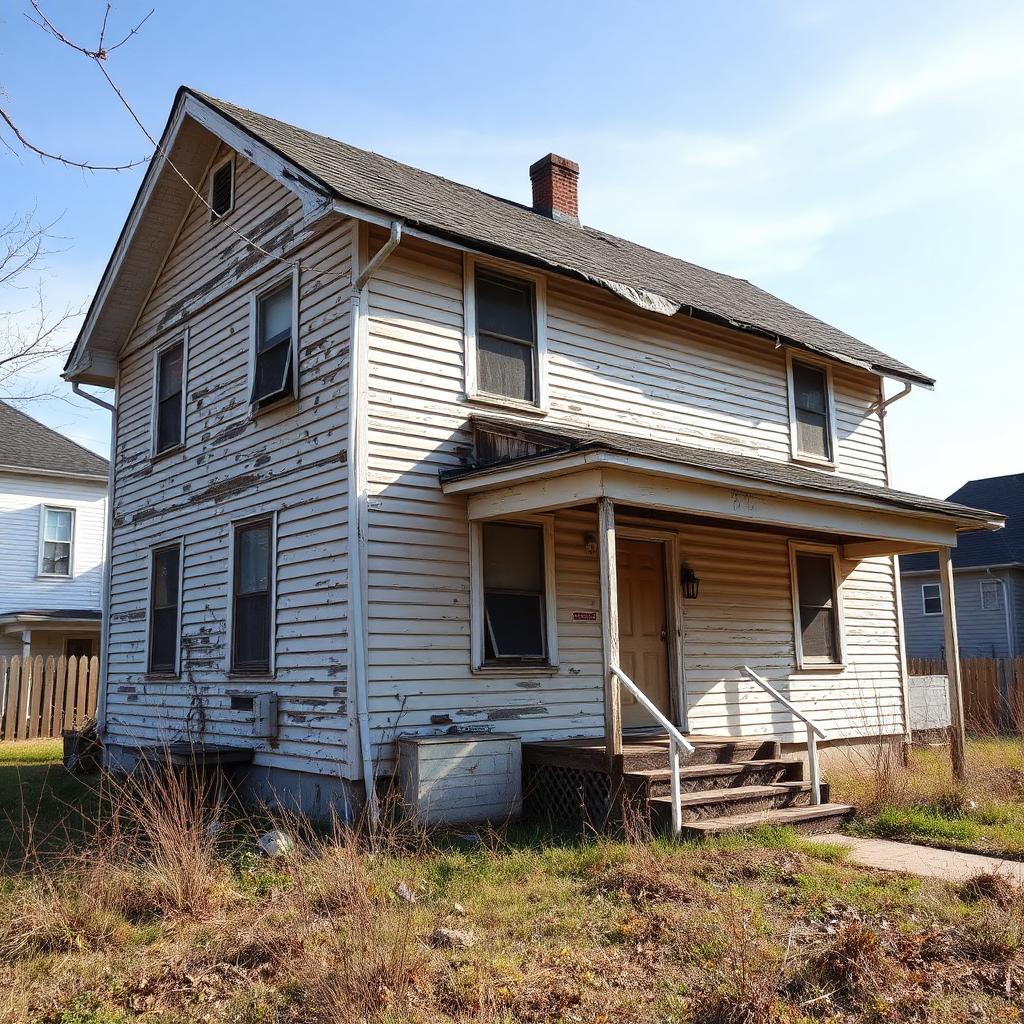

Sell a Rental Property With an Eviction in Hampton Roads VA
By Virginia Cash Real Estate ·
Short answer: Yes — you can generally sell a Virginia rental property while an eviction is pending, before you file, or after you've regained possession. The tenant's lease and legal rights don't disappear because the property is sold, so the buyer usually steps into your position as landlord. Whether selling mid-eviction beats finishing the case first depends on the property's condition, your carrying costs, how far along the case is, and how much a buyer discounts for an occupied, uncertain property. Talk to your eviction attorney before you sign a contract so the court case and the sale don't work against each other.
General educational information only — not legal advice. Virginia landlord-tenant law changes frequently, and some provisions have scheduled effective dates. Confirm current rules with a Virginia landlord-tenant attorney.
How a residential eviction works in Virginia
Residential evictions are governed by the Virginia Residential Landlord and Tenant Act and the unlawful detainer statutes in Title 8.01. A simplified nonpayment path looks like this:
| Step | Rule or typical timing |
|---|---|
| Written nonpayment notice | Under § 55.1-1245(F), the tenant generally has 14 days after written notice to pay before the landlord can terminate and seek possession (current version of the statute). |
| Unlawful detainer filed | Filed in the General District Court for the city where the property is located under § 8.01-126. |
| First return date / hearing | Set by the court; varies by docket. |
| Judgment for possession | The court may enter judgment; the tenant may have rights to redeem by paying in some cases. |
| Appeal period | An appeal to circuit court must be taken within 10 days under § 8.01-129. |
| Writ of eviction | The sheriff must serve notice at least 72 hours before executing the writ under § 8.01-470. |
Correction note: An earlier version of this article described a "5-day pay or quit" notice. Five-day notices apply to certain nonresidential tenancies; residential nonpayment notices under § 55.1-1245 currently use a 14-day period.
Total time varies widely by court schedule, whether the tenant contests, whether there is an appeal, and whether the tenant files bankruptcy. Landlords also cannot use "self-help" — changing locks or cutting off utilities to force a tenant out is prohibited under § 55.1-1252.
What stays the same when you sell
- The lease generally continues. A buyer typically takes the property subject to the existing lease and the tenant's rights.
- Security deposits must be accounted for. The VRLTA addresses how deposits are handled when ownership changes. Make sure the settlement agent and buyer have the deposit amount and records.
- Notices and the court case. Your attorney can advise whether the case continues, is dismissed and refiled by the new owner, or is resolved before closing. Don't assume the buyer can simply "take over" a pending case.
- Money owed to you. Past-due rent and any money judgment usually belong to whoever was the landlord when the debt arose, but how that's handled at sale should be written into the contract.
- Subsidized tenancies. Housing Choice Voucher (Section 8) and other assisted leases have additional requirements; the housing authority's contract terms matter.
Ready to Sell Your Hampton Roads Home Fast?
Virginia Cash Real Estate buys houses across Hampton Roads for cash — no repairs, no fees, no commissions. Get a fair cash offer within 24 hours.
Finish the eviction first, or sell now?
| Factor | Finish the eviction, then sell | Sell during the eviction |
|---|---|---|
| Sale price | Potentially higher once vacant and repaired | Usually discounted for occupancy and uncertainty |
| Carrying costs | Continue through court, turnover, and repair | End at closing |
| Repairs | Your cost and responsibility | Typically priced into an as-is offer |
| Buyer pool | Broader (owner-occupants, financed buyers) | Mostly investors and cash buyers |
| Legal steps | You complete them | Must be coordinated with your attorney |
| Certainty | Unknown condition at turnover | Price and date set in the contract |
Hypothetical example (not an actual transaction): A landlord's rental could sell for about $250,000 vacant and repaired. Finishing the eviction might take several months with no rent, plus legal fees, then $15,000 in repairs and more months on the market. An as-is offer today might be lower than $250,000, but it ends the mortgage, tax, insurance, and attorney costs immediately. Which nets more depends on real numbers — estimate both and compare.
Questions to ask any buyer of an occupied rental
- Will you buy subject to the current lease and tenant rights?
- How will the pending court case be handled, and has my attorney reviewed that plan?
- Who keeps past-due rent and any judgment?
- How will the security deposit be transferred and documented?
- Do you need interior access before closing, and how will that be arranged lawfully with notice to the tenant?
- What is your proof of funds and closing timeline in writing?
Our guide to choosing a cash buyer covers how to verify these answers.
Hampton Roads courts and local notes
Unlawful detainer cases are filed in the General District Court for the city where the property sits — Norfolk, Portsmouth, Virginia Beach, Chesapeake, Hampton, Newport News, or Suffolk. Each court sets its own docket, so timelines differ. Many rentals in the region are older homes, and some have past renovations; if work was done without permits, read selling a house with unpermitted work in Virginia before you list. If the problem is someone living there without any lease at all, see our squatter guide.
We buy rentals as-is in Norfolk, Portsmouth, Virginia Beach, Chesapeake, Hampton, Newport News, and Suffolk. Our tired landlord help page explains the broader decision, and here's how selling a rental property for cash works, tenants and all.
Frequently Asked Questions About Selling a Rental With an Eviction in Hampton Roads
Talk through your options
If you're a Hampton Roads landlord deciding whether to finish an eviction or sell now, Virginia Cash Real Estate can give you a written as-is offer to compare against your other numbers. Call Matt or Ben at (757) 699-4796 or request a no-obligation offer online.
Sources
- Code of Virginia, Virginia Residential Landlord and Tenant Act, including § 55.1-1245 and § 55.1-1252
- Code of Virginia § 8.01-126, § 8.01-129, and § 8.01-470