Can I Sell a House With Unpermitted Work in Virginia?
By Virginia Cash Real Estate ·
Yes, a Virginia house with unpermitted work may be sellable, including as-is, but the missing permit can affect the buyer's decision, financing, price, and contract. A sale does not automatically resolve a code violation. First determine what work was done, whether a permit was required, and whether there is an active enforcement case. Not every improvement must be removed or legalized before a sale; the answer depends on the work, locality, safety issues, and transaction.
If the house also needs substantial repairs, our major-repairs help page explains the broader as-is selling option.
What counts as unpermitted work
Unpermitted work is a project performed without a permit that was required for that work. It is different from a project for which no permit was needed. It is also different from an issued permit that was never closed after final inspection.
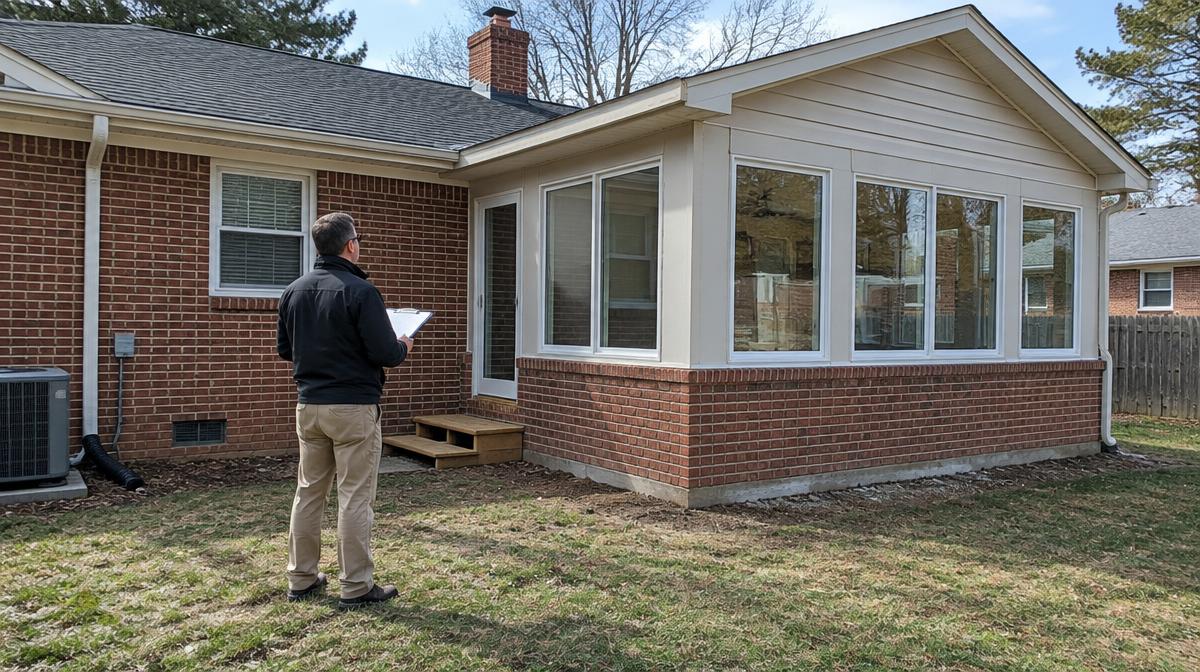
Examples worth checking include a room addition, garage conversion, finished attic, structural wall change, or electrical and plumbing alterations. These are prompts to investigate, not a claim that every example always requires the same approval. Project scope and applicable rules matter.
The Virginia Department of Housing and Community Development explains that the statewide building code covers construction, additions, and specified renovation, repair, and use changes. Local building departments enforce it. Start with the department serving the property, not a general answer from another city.
A missing record is not a final conclusion
You might discover a problem when a buyer asks for permit records, an inspector sees unusual construction, or an appraisal raises questions about a converted room. An online search returning no results does not by itself prove that work was illegal. Older records, different address formats, and incomplete documentation can require further investigation.
Distinguish three questions:
- Was a permit required when the project was done?
- Was the permit issued, and were required inspections completed?
- Is there an existing unsafe condition or enforcement notice?
The answers can lead to very different selling decisions. Avoid advertising a converted garage as approved living space until you have support for that description.
Start with a document checklist
Gather contractor invoices, drawings, purchase documents, permit numbers, inspection reports, and any letters from the city. Record what you know about the work and what you do not know. If the renovation predates your ownership, make that distinction instead of guessing who performed it.
Ask the building department how to search historical records and whether the permit has a final inspection. A permit application, issued permit, and completed inspection are not interchangeable records.
For a Hampton Roads property, contact its own locality: a Norfolk address belongs with Norfolk's building department, for example, rather than Virginia Beach's. The DHCD building-official directory helps identify the relevant office.
Virginia disclosure rules need careful handling
Virginia's Residential Property Disclosure Act includes a buyer-beware disclosure framework and encourages purchaser due diligence. That should not be read as permission to make false statements or ignore a specific disclosure requirement.
Virginia Code §55.1-706 addresses an owner's actual knowledge of specified pending building-code enforcement actions affecting safe, decent, sanitary living conditions, and specified unremedied zoning violations after written notice. It is narrower than saying every missing permit triggers exactly the same statutory disclosure duty.
Have a Virginia real estate attorney or appropriately qualified professional review your actual notices and the transaction's requirements. Answer questions accurately. If you do not know whether a permit exists, say that and identify the records you have rather than claiming the renovation is approved.
An as-is contract addresses the negotiated sale condition; it is not a substitute for required disclosures. Our complete as-is selling guide covers the wider transaction, while this article focuses on permit-specific uncertainty.
Ready to Sell Your Hampton Roads Home Fast?
Virginia Cash Real Estate buys houses across Hampton Roads for cash — no repairs, no fees, no commissions. Get a fair cash offer within 24 hours.
How permits can affect financing and appraisal
A buyer using a mortgage may need the property to satisfy that loan program's requirements. Questions about safety, legal use, or supported living area can prompt further review, repair conditions, or changes to the transaction. Do not assume every lender will reject the home, or that every lender will accept it.
An appraiser may need to evaluate a converted room differently from the owner's expectations. A larger advertised square footage does not automatically produce a higher appraisal. Ask your agent how to describe the space accurately and ask the buyer's lender about any requirements before relying on the financed offer.
A cash purchase removes the buyer's mortgage-approval step, but it does not remove title concerns, municipal enforcement, insurance questions, or the buyer's own due diligence. Those issues still need to be understood and allocated in the agreement.
Inspection, appraisal, and permit approval are different
A home inspection can identify visible condition concerns; it does not issue a building permit or guarantee that concealed wiring meets code. An appraisal concerns valuation and the scope of that appraisal; it is not a municipal final inspection.
Similarly, a contractor's assurance that work looks fine is not the same as a closed permit record. If a buyer needs official confirmation, ask the locality what documentation or inspection is required.
Keep those distinctions clear when negotiating. Otherwise, a seller may pay for an inspection expecting it to resolve a permit problem, only to learn that additional records or an official inspection are still necessary.
Compare three selling approaches
| Approach | Possible advantage | What to confirm |
|---|---|---|
| Investigate and address the work before listing | Less uncertainty for buyers | Local requirements, scope, cost, and inspection timing |
| List as-is with accurate information | Exposure to a wider buyer pool without completing all work first | Buyer financing, contract conditions, and disclosures |
| Sell to a cash buyer who understands the issue | Buyer can assess risk without a mortgage lender | Price, due diligence, enforcement obligations, and closing terms |
None is automatically best. If the problem is limited and documentation is obtainable, resolving it may help a traditional sale. If investigation or repairs would be expensive and funds are tight, an informed as-is buyer may be worth comparing. Get realistic estimates before deciding.
When to ask the building department about correction
Contact the locality early if you have an enforcement notice, a safety concern, or an open permit. Ask specific questions: Is a permit required for this scope? Can records be retrieved? What inspection is missing? What process applies to existing work?
Depending on the circumstances, the answer may involve drawings, inspections, correction of defects, or further investigation. Do not promise a buyer that approval will be inexpensive or completed by a particular date without confirmation.
A retroactive permit is not something to assume will be granted automatically. Conversely, a missing permit does not establish that the entire addition must be demolished. Ask for the actual requirements and involve a qualified contractor or design professional where appropriate.
Open code cases and unsafe-property notices
If a notice restricts occupancy or identifies an unsafe structure, that is more serious than a paperwork question. Follow the notice's instructions, confirm deadlines, and seek professional advice. A purchase contract does not itself suspend municipal enforcement.
Ask an attorney and settlement professional whether recorded liens, pending actions, or contract obligations affect closing. Get any agreement about corrective work and responsibility in writing; an agreement between buyer and seller does not necessarily change the locality's enforcement authority.
For the separate issue of a condemned or unsafe property, see our condemned-house help page. Do not assume an undocumented renovation means the house is condemned.
A practical example of comparing options
Hypothetical example—not a VCRE purchase: an owner learns that a former owner's garage conversion has no readily available final inspection record. Before spending money, the owner requests historical permit records and asks whether an inspection was required and completed.
If records confirm approval, the seller can provide them to interested buyers. If they show unresolved work, the seller can obtain a qualified repair estimate and compare addressing the issue with selling as-is. If a buyer's lender requires correction, that financed offer must be evaluated with the requirement in mind.
The useful first step is identifying the actual issue, not immediately pricing demolition or assuming a cash offer solves everything. Our cash-buyer vetting guide can help you ask about the buyer's review process and written conditions.
Frequently Asked Questions
Compare an informed as-is offer
Virginia Cash Real Estate can evaluate a Hampton Roads home with renovation or condition concerns. Contact us or call (757) 699-4796 and explain the known work and any notices. Compare the written offer with the cost and practicality of your other options. Do not treat an offer as official permit approval.
General educational information, reviewed October 30, 2026—not legal advice or a determination of building-code compliance. Local officials and qualified professionals must evaluate your specific property.