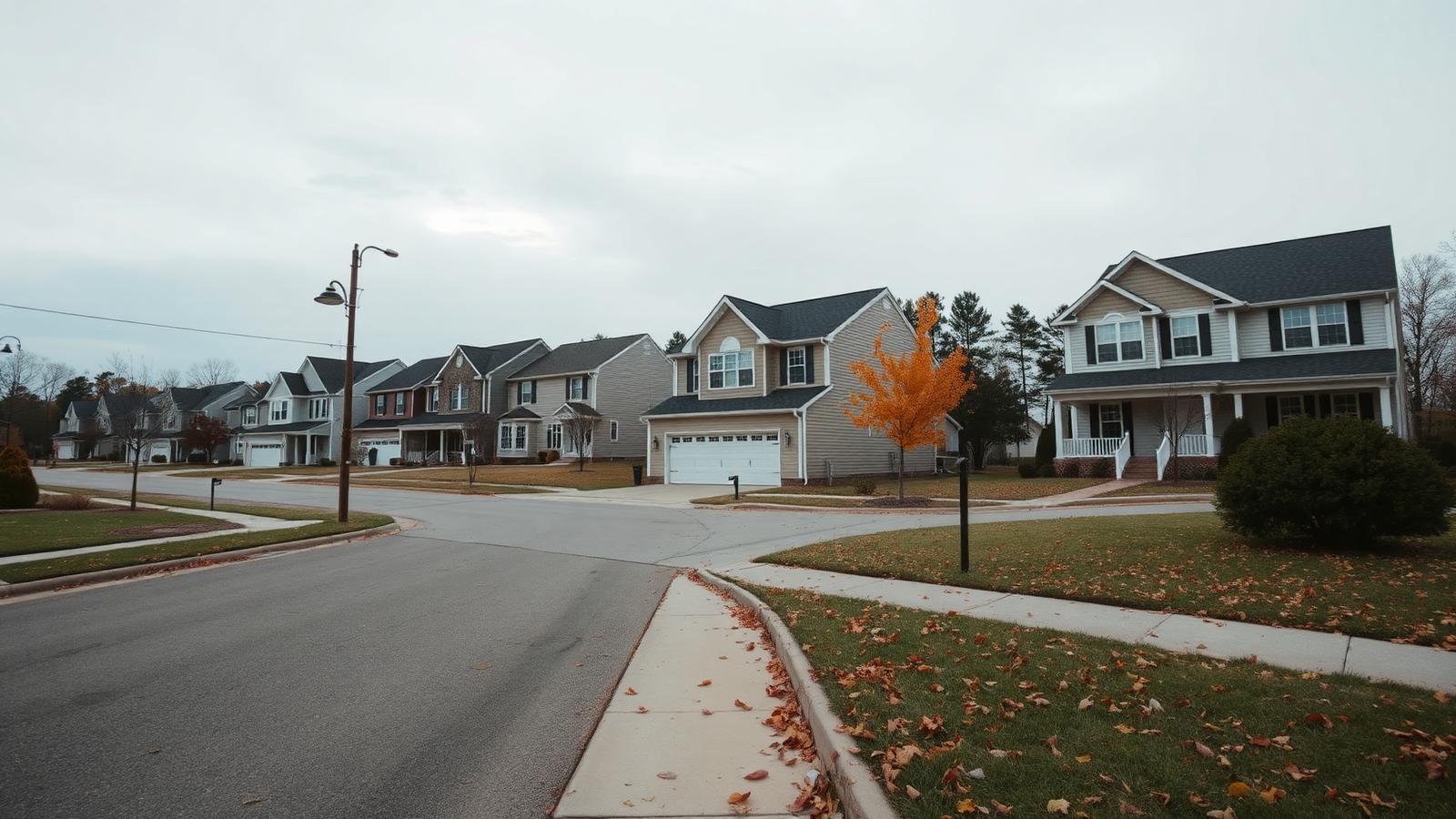
Is the Housing Market Slowing Down? A 2026 Reality Check for Hampton Roads Sellers
By Virginia Cash Real Estate ·
Is the Housing Market Slowing Down in 2026? What Hampton Roads Home Sellers Need to Know
If you've been watching your neighbor's house sit on the market for two months with a "Price Reduced" rider bolted to the sign, you're not imagining it. The 2026 housing market has cooled noticeably from the frenzied 2021–2022 peak, and Hampton Roads — Virginia Beach, Norfolk, Chesapeake, Portsmouth, Hampton, Newport News, and Suffolk — is feeling it right along with the rest of the country. Higher mortgage rates, cautious buyers, longer days on market, and aggressive lowball offers have shifted the balance of power. What was firmly a seller's market three years ago is now, in most price bands, a buyer's market.
This is not a crash. Prices in most of Hampton Roads are still holding above 2023 levels, and there's no wave of forced foreclosures like 2008. But the tempo of the market has changed, and the tactics that worked in 2022 — "list on Thursday, take highest and best by Sunday" — don't work anymore. If you're thinking about selling your Hampton Roads house in 2026, you need to understand what's actually happening, why buyers feel emboldened, and what your realistic options are.
Related reading in this cluster:
Yes, the Housing Market Is Slowing Down in 2026 — Here's the Evidence
The slowdown isn't a vibe. It shows up in every data set that matters to a home seller: mortgage rates, inventory, days on market, price reductions, and closed-sale-to-list-price ratios. Nationally and here in Hampton Roads, all five indicators are moving the same direction — away from sellers.
Mortgage Rates Are Still the Anchor
The 30-year fixed mortgage rate has spent most of 2026 sitting in the 6.5%–7.25% range. That's down from the 2023 peak near 8%, but it's roughly double what buyers were paying in 2021. On a $350,000 loan, the difference between a 3% rate and a 6.75% rate is about $760 more per month — that's a car payment and a grocery bill added onto every mortgage. Buyer purchasing power has been compressed accordingly. A household that could qualify for a $475,000 home in 2021 now qualifies for closer to $325,000 with the same income.
The result: fewer buyers per listing, and the buyers who are still shopping are much more sensitive to price, condition, and concessions.
Inventory Is Up, and Homes Are Sitting Longer
Active listings in the Hampton Roads MLS have climbed steadily since early 2025. Months-of-supply — the metric that separates a seller's market from a buyer's market — has crossed the 5-month threshold in several price bands, especially over $500,000. Anything above roughly 6 months is textbook buyer's market territory. Days on market (DOM) for a typical Hampton Roads single-family home is now running 45 to 75 days, versus 7 to 14 days at the 2022 peak.
That extra time on market changes buyer psychology. When a house has been listed for 60+ days, buyers assume something is wrong with it — even when the only "problem" is that it's priced at last year's comps.
Price Reductions Are the New Normal
In 2022, roughly 15% of Hampton Roads listings needed a price cut before selling. In 2026, that number is closer to 35–45%, and in some submarkets (higher-priced homes, dated interiors, less-desirable school zones) it's over half. If you list at the price your Zillow Zestimate spits out, you should assume you'll be dropping the price at least once — probably twice — before you get a serious offer.
Sale-to-List Ratios Have Fallen Below 100%
At the peak, Hampton Roads homes routinely sold for 2–5% over asking. In 2026, the average closed sale is coming in at 96–98% of list price, and it's common to see final sale prices 5–8% below the original list once you factor in price cuts and seller concessions. That's the clearest single number that says "buyer's market."
Why Buyers Feel Empowered in 2026
Understanding buyer psychology matters, because it explains the offers you're going to see. Today's buyer is not the same person as the 2021 buyer. They've watched their friends overpay, they're paying twice the interest, and they know they have leverage. Here's what that looks like on paper.
Lowball Offers Are Back
For most of 2020–2022, writing an offer below list price was a waste of time — you'd just get outbid. In 2026, buyers and their agents are routinely opening at 8–15% below asking, sometimes more on homes that have been on the market a while. The reasoning is simple: if the house has sat for 60 days, the buyer assumes the seller is motivated and negotiable. Even if you're not, you'll get the lowball offer anyway, and you'll have to decide whether to counter, ignore, or walk.
Buyers Are Demanding Seller Concessions Toward Closing Costs
The single biggest tactical shift in 2026 is buyers asking sellers to pay closing costs and rate buy-downs. In a rising-rate environment, buyers care more about their monthly payment than the sticker price. A common offer structure looks like this:
- Purchase price: at or slightly under list
- Seller concession: 2%–3% of purchase price toward buyer's closing costs
- Sometimes an additional 1–2% toward a temporary or permanent rate buy-down
That means on a $400,000 sale, a "full price offer" can net you $12,000–$20,000 less than the headline number suggests. Every seller in 2026 needs to think in net proceeds, not list price.
Inspection Repair Requests Are Longer and More Aggressive
During the boom, buyers routinely waived inspections or accepted homes "as-is" to win bidding wars. In 2026 that's over. Buyers order inspections, and their agents come back with repair addenda that read like renovation punch lists: roof patches, HVAC servicing, panel upgrades, moisture in the crawlspace, GFCI outlets, cosmetic drywall, the works. Buyers know they can walk if you refuse, because there's another house down the street. Expect to negotiate repairs — or credits in lieu of repairs — on nearly every deal.
Longer Contingency Periods and More Fall-Throughs
Financing contingencies are stricter. Appraisals are coming in lower more often than they did during the peak, and when they do, buyers no longer just cover the gap out of pocket — they renegotiate or terminate. The National Association of Realtors and multiple MLS boards have reported that contract cancellation rates rose sharply in 2025 and 2026, running well above pre-pandemic norms. Every seller should be prepared for the possibility that the first accepted offer doesn't make it to closing.
Ready to Sell Your Hampton Roads Home Fast?
Virginia Cash Real Estate buys houses across Hampton Roads for cash — no repairs, no fees, no commissions. Get a fair cash offer within 24 hours.
What This Means for a Traditional Hampton Roads Listing in 2026
If you decide to list your home on the MLS in 2026, here's the honest picture. This isn't meant to talk you out of it — for the right home and the right seller, a traditional listing is still the highest-price path. But you need to plan for the reality:
- Time to sale: budget 60–120 days from list to closing table, not 30
- Prep costs: $3,000–$15,000 in paint, flooring, staging, minor repairs, and professional photos to compete with newer listings
- Price reductions: plan for at least one, possibly two
- Concessions: budget 2%–4% of sale price to go back to the buyer at closing
- Repairs: budget another 1%–3% for inspection-driven repair credits
- Commission and closing costs: 5%–7% of sale price
- Holding costs during listing: 2–4 more months of mortgage, insurance, taxes, utilities, and lawn care
When you stack all that up, the "net" from a $375,000 MLS sale in 2026 can easily land in the $310,000–$325,000 range — and that assumes the first buyer doesn't walk.
Who Gets Hurt Most in a Slowing Market
Not every seller feels the slowdown the same way. If you have low or no mortgage, plenty of equity, a house in show-ready condition, and no time pressure, you can ride out a slow market — you can afford to wait for the right buyer. But some sellers can't, and this is where the 2026 market punishes hardest:
- Homeowners who need to move for a job or PCS orders — the clock doesn't wait for the market
- Inherited-property owners paying carrying costs on a house 500 miles away
- Landlords with a difficult tenant, deferred maintenance, or a bad rental economics
- Divorcing couples who need to liquidate an asset and split proceeds
- Homeowners behind on payments or property taxes where every extra month on market means more late fees, penalties, and equity erosion
- Owners of dated or distressed properties that would need major work to compete with newer inventory
- Sellers who need certainty of close because they've already made an offer contingent on their sale
For those homeowners, a listing that takes 4 months and might fall apart at the closing table is not a solution — it's a new problem.
The Cash-Sale Alternative When the Market Is Slowing
This is where local cash home buyers actually earn their keep. A cash sale won't beat a perfectly prepped, perfectly priced MLS listing in a hot market. But in a slowing 2026 market, the math changes. When you compare a cash offer to a traditional listing net-of-everything — commissions, concessions, repairs, price reductions, holding costs, and 90+ days of stress — the gap narrows dramatically, and for many sellers it closes entirely or flips the other way.
A cash offer from a legitimate local buyer like Virginia Cash Real Estate gives you:
- A firm number in 24 hours — no listing, no showings, no strangers walking through your kitchen on a Saturday
- No repairs, no cleaning, no staging — we buy the house exactly as it sits, appliances or not, contents or not
- No commissions, no buyer concessions, no closing-cost credits — the number we quote is what you sign for
- No inspection renegotiation — we've already priced in condition; we don't come back for repair credits
- No financing contingency — cash means cash, so there's no lender waiting for a low appraisal to blow up your deal
- A closing date you pick — as fast as 14 days, or as far out as you need if you're coordinating a move
For a homeowner watching the market slow month by month, that certainty has real value. Every 30 days a house sits unsold in 2026 costs money — mortgage interest, insurance, taxes, utilities, lawn maintenance, and the emotional cost of keeping a house perpetually "show ready."
How to Decide: List, Wait, or Sell to a Cash Buyer
There's no one-size-fits-all answer. Here's a simple framework:
List traditionally if: your house is in strong, updated condition, you're in a desirable school zone or waterfront submarket, you have no timeline pressure, you can afford 60–120 days of carrying costs, and you're mentally prepared for price cuts and concession negotiations.
Wait if: you have significant deferred maintenance or a dated interior, you don't want to spend money prepping the house, you can hold indefinitely, and you're willing to bet that rates fall meaningfully in 2027 (nobody knows if they will).
Sell for cash if: you need certainty, speed, or convenience — you're relocating, inherited the property, dealing with tenants, behind on payments, going through a life transition, or you simply don't want to spend three months living inside a listing that may not close.
The most useful thing you can do is get both numbers on the table. Talk to a local agent about a realistic listing price and net after all the 2026 friction. Then get a cash offer from a legitimate local buyer. Compare net proceeds and timeline side by side. That's the only fair comparison in a slowing market.
If your house needs work and a slower market makes listing feel risky, you can sell your house as-is for cash instead.
Frequently Asked Questions About the 2026 Housing Market
Get a Real Cash Number Before You Decide
If you're weighing whether to list, wait, or sell for cash in this 2026 market, the smart move is to get an actual cash number in hand before you commit to anything. It costs nothing, there's no obligation, and you'll finally have a real apples-to-apples comparison — cash-in-hand vs. estimated net after a traditional listing.
Virginia Cash Real Estate buys houses across all seven Hampton Roads cities — Virginia Beach, Norfolk, Chesapeake, Portsmouth, Hampton, Newport News, and Suffolk. Any condition, any price band, any situation. We'll walk you through the numbers honestly, and if listing is actually the better move for your situation, we'll tell you that too.